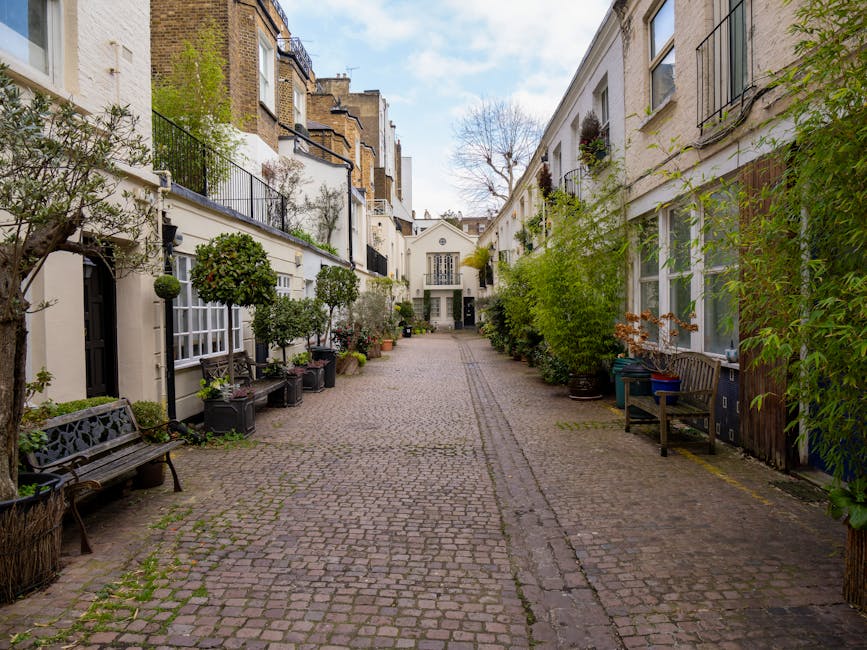
Notting Hill Gate small garden gardeners for terrace homes: a practical guide to making a compact outdoor space feel special
If you live in a terrace home near Notting Hill Gate, you already know the mix of charm and challenge that comes with a small garden. There is the lovely part: a private pocket of green, a place for coffee, herbs, or a quiet evening after work. Then there is the less glamorous part: awkward shade, narrow side access, neighbour overlook, wind tunnels, patchy soil, and not nearly enough room for the ideas you had in your head. That is exactly where Notting Hill Gate small garden gardeners for terrace homes can make a real difference. The right approach does not try to force a big-garden solution into a small space. It works with the space you actually have.
In this guide, you will find a clear, practical breakdown of what small-garden specialist care looks like, how it works in terrace homes, what to expect, and how to avoid the common mistakes that waste time and money. Nothing fancy for the sake of it. Just sensible, well-grounded advice for making a compact London garden feel calm, usable, and genuinely yours.
Why Notting Hill Gate small garden gardeners for terrace homes Matters
Small gardens are often underestimated. People look at a 4-metre strip behind a terrace and assume it is only good for a pot or two. That is not really true. With thoughtful planting, tidy hard landscaping, and a maintenance plan that fits the pace of London life, a small terrace garden can become one of the most useful rooms in the house. It just happens to be outdoors.
In Notting Hill Gate and the surrounding streets, terrace homes tend to come with limited width, shared boundaries, and design constraints that reward careful planning. You are not just choosing plants. You are managing light, sightlines, privacy, drainage, accessibility, and how often you can realistically look after the space. A good small-garden gardener understands that a terrace garden must work on weekdays, in winter, and when nobody has time for elaborate upkeep. That is the real job.
There is also the local context to think about. Many terrace gardens here are shaded by neighbouring buildings, have mature trees nearby, or face a fair bit of wind. So the approach has to be practical from the start. If a plan looks beautiful on paper but fails after one wet February, it was never the right plan.
For homeowners who want a strong foundation, a broader range of gardening services in North Kensington can help connect design, planting and maintenance into one joined-up approach. And if the garden needs a full reset before any planting begins, it is often wise to begin with garden maintenance support so the space is ready to use, not just looking neat for a week.
How Notting Hill Gate small garden gardeners for terrace homes Works
Small-garden work is usually more methodical than dramatic. You start with what the garden already gives you, then build around it. In a terrace home, that means looking at access points, existing paving, boundary height, soil quality, sunlight hours, drainage behaviour, and whether the garden is used for entertaining, family time, planting, or simply surviving the school run and the work week.
A solid process often looks like this:
- Assessment: Measure the space, note light and wind, check soil condition, and look for issues such as root competition, weeds, or tired paving.
- Planning: Decide what the garden must do. Sit? Grow herbs? Offer privacy? Keep pets safe? Be low-maintenance?
- Structure first: Put in the bones of the garden before the planting. That can mean edging, paving repair, screening, containers, or vertical supports.
- Plant selection: Choose plants that suit the conditions rather than fighting them. A shady courtyard needs different choices from a bright south-facing terrace.
- Maintenance rhythm: Create a simple upkeep schedule so the garden stays under control, not just attractive on day one.
That sequence matters because small gardens punish bad sequencing. If you plant before you solve drainage, you will be back out there with soggy roots and frustration. If you buy furniture before you understand circulation space, you will be squeezing sideways past a chair every time you open the door. Not ideal, and yes, it happens more than people admit.
Good gardeners also think vertically. On a terrace home plot, the ground plane is only part of the story. Walls, fences, railings, screens and trellises can all carry planting or create privacy. A useful reference point for that kind of thinking is the guide to maximising space with vertical gardening, which fits this topic very neatly.
Key Benefits and Practical Advantages
When a compact garden is designed properly, the benefits are bigger than people expect. It is not only about looks. It is about how the space functions day to day.
- Better use of limited space: Every square metre gets a job, so nothing feels wasted.
- Less maintenance stress: A small, tidy garden with the right planting plan is much easier to keep on top of.
- Improved privacy: Smart screening can make a terrace garden feel secluded without turning it into a box.
- Year-round structure: Evergreen planting and robust materials prevent the garden from looking empty in winter.
- More usable outdoor living: The space becomes somewhere you actually sit, not just pass through.
- Better value from the property: A well-finished small garden often adds a lot to the overall impression of a terrace home.
There is a subtle psychological benefit too. A neat, well-planned outside space can calm the whole home. You step out in the morning, see a bit of order, hear the quiet rustle of leaves, and the day feels less crowded. A bit romantic, perhaps. But true.
For many households, the smartest upgrades are not grand at all. A decent seating corner, improved planting around the boundaries, a clean patio, and one or two focal features can lift the whole garden. If your paving is tired or slippery, pairing the design work with patio cleaning can make an immediate difference before any planting begins.
Who This Is For and When It Makes Sense
This kind of specialist support is a strong fit if you live in a terrace home and any of the following sound familiar:
- You have a small garden that feels cluttered or awkward.
- You want privacy from nearby windows and neighbouring terraces.
- You like the idea of planting but do not want a high-maintenance jungle.
- You need the garden to work for children, pets, dining, or relaxing.
- You have inherited a neglected space and do not know where to start.
- Your current planting looks tired, sparse, or overgrown in all the wrong places.
It also makes sense if you have already tried to DIY the space and realised the problem is not effort, but planning. That is a common turning point. You can pull weeds and buy pots all weekend, yet still end up with a garden that feels busy rather than beautiful. Why? Because the layout is doing the wrong job.
Families often need a safer, more forgiving setup with visible boundaries and robust materials. People working long hours tend to want simple, reliable maintenance. And if your terrace garden sees a lot of entertaining, then circulation and seating matter more than a huge number of plants. Truth be told, the right answer depends on how you live, not what a trend board says.
If you are starting from a blank slate, the article about refreshing a forgotten garden space is a useful companion because it mirrors the same "start with the bones" mindset.
Step-by-Step Guidance
If you want a small terrace garden to feel deliberate rather than improvised, the safest route is to work in stages. Here is the practical version.
- Clear the space properly. Remove dead growth, broken pots, loose debris, and anything that hides the real shape of the garden. You need to see the ground before you can improve it.
- Check the hard surfaces. Inspect paving, edges, steps, and any decking for movement, staining, moss or drainage issues. If the patio is grime-covered, get that sorted first.
- Measure the actual usable zones. Decide where you will walk, sit, plant and store tools. It sounds obvious, but it is where many small gardens go wrong.
- Set one clear purpose. Choose the primary use. A garden can do more than one thing, but it should have a main role. Relaxing garden? Children's play area? Herb garden? Pick the anchor.
- Build structure. Add screening, planters, edging, a seat, or a path line before planting heavily.
- Use layered planting. Put taller plants towards boundaries, mid-height plants in the middle, and trailing or groundcover plants at the edge.
- Keep maintenance simple. Choose manageable plant numbers and avoid designs that only work if you have two spare hours every Saturday.
That last point matters more than people think. A small garden should feel easier than a large one, not more stressful. If maintenance keeps slipping, the design is usually too complicated or the plant mix is too demanding.
For a lot of terrace homes, this is also where practical support for trimming, cutting back and shaping becomes useful. If boundary plants are becoming unwieldy, the right hedge trimming service can restore light and space, while a proper lawn care approach helps if there is even a small patch of grass to keep healthy.
Expert Tips for Better Results
Here is where the small details start to matter. They do not always look exciting, but they make the garden feel settled and easier to live with.
1. Think in layers, not single features
A terrace garden often looks better when it has a clear foreground, middle ground and boundary treatment. That might mean low containers by the door, a seating zone in the centre, and climbers or screening at the back. Simple, but effective.
2. Use repetition to calm the eye
In compact spaces, repeating the same pot shape, colour family or plant type creates order. Too many different styles can make the garden feel busier than it is. A little repetition goes a long way.
3. Make privacy feel soft, not harsh
Solid fencing can be useful, but softer screening often feels more pleasant. Mixed planting, climbers, slatted panels, or layered containers can block sightlines without making the space feel boxed in. If boundary replacement is part of the job, fencing work may be part of the overall plan.
4. Choose plants that earn their place
Every plant should justify its footprint. In a tiny terrace plot, a plant that looks great for two weeks and then becomes a nuisance is not a bargain. Evergreen structure, long flowering seasons, scent, or useful harvest all count as value.
5. Respect the light you actually have
It is tempting to wish the garden had more sun. Fair enough. But it is wiser to plant for the light you get. Shady or north-facing spots can still feel lush, especially with the right foliage and climbers. A helpful read here is the evergreen climbers article.
6. Keep one area deliberately open
This is a tiny design trick, but it works. Leave one patch visually lighter so the eye gets a rest. A small terrace garden feels larger when not every inch is filled.
And yes, there is such a thing as too many pots. I know, shocking. But it happens.
Common Mistakes to Avoid
Most problems in small terrace gardens are not caused by bad intentions. They come from trying to do too much at once, or from ignoring the garden's real conditions.
- Overfilling the space: More plants and furniture do not automatically make a garden better.
- Ignoring drainage: Waterlogging can quietly ruin a good planting plan.
- Choosing plants for the picture, not the site: A plant that loves sun will not magically love shade.
- Using oversized furniture: Scale matters a lot in terrace gardens.
- Forgetting maintenance access: If you cannot reach the back of a bed, it will become a problem.
- Skipping the clean-up stage: A lovely planting design on a dirty base still looks half-finished.
Another easy mistake is assuming that a small garden does not need professional attention because it is "only tiny". In practice, small spaces can be more demanding, because every centimetre counts and every flaw is visible. If there is a lot of weed pressure, it helps to think about ongoing control rather than one-off clearing. The piece on weed control tactics is a useful reminder that maintenance is part of the design, not an afterthought.
One more thing: do not start with expensive materials if the layout is still uncertain. Sort the shape first. Then choose the finish.
Tools, Resources and Recommendations
For small garden work, the best tools are usually the ones that make regular jobs quick and tidy. Nothing complicated.
- Hand shears and secateurs: Ideal for precise trimming and deadheading.
- Lightweight fork or trowel: Helpful for container planting and soil refreshing.
- Pressure washer or patio cleaner: Useful for bringing hard surfaces back to life, though care is needed on older paving.
- Quality compost and mulch: Good soil cover improves moisture retention and neatness.
- Planters with drainage holes: Absolutely essential in terrace gardens where standing water is a risk.
- Ties, supports and trellis: Very useful for climbers and vertical planting.
In terms of recommendations, consider the garden's job before buying anything. If you need a place to sit, a compact bistro set may beat a large bench. If you want herbs, a few well-positioned containers may be smarter than a full bed. If you want more seasonal colour, staggered planting often gives better results than one large burst of flowers.
For gardeners who prefer a design-led approach, the article on creating a cosy seating corner fits perfectly with terrace-home thinking. If you want edible planting to earn its keep, herb gardening tips are a practical next stop. Small spaces love dual-purpose ideas. They really do.
Law, Compliance, Standards, or Best Practice
For most small residential garden work in London, the key issue is not heavy regulation. It is sensible best practice. That said, terrace homes can involve shared boundaries, neighbour considerations, and access arrangements, so a careful approach matters.
Here are the main things to keep in mind:
- Respect boundary lines: If work affects a shared fence or wall, it is worth confirming what belongs where before making changes.
- Think about neighbour impact: Hedges, climbers, trees and tall screening can affect light and privacy on both sides of a terrace.
- Use safe working methods: Cutting, lifting and pressure cleaning should be done carefully, especially around older surfaces and confined access.
- Check tree and root issues properly: If a mature tree is affecting the garden, specialist assessment can be sensible before any major action.
- Dispose of green waste responsibly: Good practice includes tidy removal, composting where appropriate, and not leaving waste behind for days.
When tree growth is involved, especially near structures or overhangs, specialist attention can be useful. A terrace garden is not the place for guesswork with large branches. If trees are part of the problem, tree surgery support may be the responsible next step.
Best practice also means choosing solutions that age well. A small garden should not only look good after installation; it should still be working six months later, then a year later, then after a wet winter. That is the standard worth aiming for.
Options, Methods, or Comparison Table
Below is a simple comparison of common approaches for terrace-home garden improvement. There is no one correct answer, but the differences are worth seeing in one place.
| Approach | Best for | Strengths | Trade-offs |
|---|---|---|---|
| Container-led planting | Very small gardens, renters, flexible layouts | Easy to change, suits patios, good for herbs and seasonal displays | Needs watering and can look cluttered if overdone |
| Border-and-boundary planting | Gardens needing privacy and structure | Softens edges, creates depth, improves screening | Needs more care and careful species choice |
| Hard landscaping focus | Low-maintenance households | Clean lines, easier upkeep, practical seating and access | Can feel too stark without planting balance |
| Mixed-use compact design | Families and owners who want flexibility | Balances beauty, function and usability | Needs a stronger plan to avoid visual clutter |
If you are unsure which route suits your terrace home, mixed-use usually wins. It gives you enough planting to soften the space, enough structure to make it practical, and enough simplicity to keep maintenance realistic. A little of everything, but not too much. That's usually the sweet spot.
Case Study or Real-World Example
Imagine a narrow terrace garden off a two-storey home near Notting Hill Gate. The space is shaded at the back, the paving is stained, the right-hand boundary feels too exposed, and there is no obvious place to sit without blocking access. It is one of those gardens that makes you sigh a bit when you open the door.
The solution starts with clearing and cleaning, not planting. The paving is restored, the edge is defined, and one compact seating area is placed where the light is best in late afternoon. Then the boundary gets layered planting: one taller evergreen for structure, one or two climbers on supports, and a handful of containers with herbs and seasonal colour closer to the house. The result is not a show garden. It is better than that. It becomes usable.
In situations like this, a sensible sequence often includes tidying the hard surface first, then refining the planting, then keeping up with a manageable maintenance plan. If the original garden had been left neglected for a while, the article about first moves in refreshing a forgotten garden space matches the same real-world process.
What changes most is not just the look. It is how the family uses the space. A morning cup of tea feels easier. The children have a clear line to move through. Neighbours are less directly visible. And the garden starts being part of everyday life instead of a project waiting to happen. That, honestly, is the win.
Practical Checklist
Use this checklist before you commit to any terrace garden work.
- Have you measured the space properly?
- Do you know where the strongest sun and shade fall?
- Is drainage behaving well after rain?
- Have you identified the garden's main purpose?
- Are the boundaries tidy, sound and appropriate for privacy?
- Have you chosen plants for the actual site conditions?
- Will you still be able to maintain the design next month?
- Is there enough open space for walking and sitting?
- Have hard surfaces been cleaned or repaired where needed?
- Is there a clear plan for waste removal and ongoing upkeep?
If you can tick most of those boxes, you are already ahead of the game. And if not, that is fine too. Better to spot the gaps now than halfway through planting.
Get a free quote today and see how much you can save.
Conclusion
Notting Hill Gate terrace gardens do not need to be large to be rewarding. They need to be intelligent. The best results come from reading the space properly, choosing the right mix of structure and planting, and keeping the maintenance plan realistic from the start. Small gardens respond well to calm decision-making. They really do.
If you want a compact outdoor space that looks considered, feels private, and works in everyday life, a specialist small-garden approach is worth it. Not because it is trendy. Because it is practical. And in a terrace home, practicality is what keeps the garden alive.
When the design fits the home and the upkeep fits your life, even the smallest patch can feel generous. That is the lovely part.
Frequently Asked Questions
What do Notting Hill Gate small garden gardeners for terrace homes actually do?
They focus on compact outdoor spaces in terrace homes, helping with layout, planting, privacy, structure, and manageable upkeep so the garden works in real life, not just in photos.
Is a small terrace garden worth improving?
Yes. Small gardens can be surprisingly useful if they are planned properly. They can provide seating, privacy, herbs, seasonal colour, and a quiet place to unwind without needing much land.
How do you make a small garden look bigger?
Use a simpler layout, repeat materials, keep one area open, and add depth through layered planting and vertical features. Avoid overcrowding, because that usually makes the space feel tighter.
What plants work best in a terrace home garden?
That depends on light and shelter, but compact evergreens, climbers, herbs, and reliable container plants are often strong choices. The best plant is the one suited to your actual conditions.
Can a small garden still have privacy?
Absolutely. Privacy can come from screens, trellis planting, hedging, layered containers, or boundary treatment. It does not always need a solid wall to work well.
How often should a small garden be maintained?
It depends on the planting style, but small gardens usually benefit from regular light maintenance rather than occasional heavy work. A little and often approach tends to work best.
Do terrace gardens need professional help?
Not always, but professional help is useful if the garden is overgrown, the layout is awkward, drainage is poor, or you want a design that lasts instead of a quick tidy-up.
Is patio cleaning important before redesigning a small garden?
Yes. Clean hard landscaping gives you a proper starting point and helps the whole garden feel fresher. It also makes it easier to judge what really needs changing.
What is the biggest mistake people make with small gardens?
Trying to do too much. Too many plants, too much furniture, too many materials. A small garden usually needs restraint more than ambition, at least at first.
How do I know if my garden needs replanting or just maintenance?
If the structure is sound but the beds look tired or messy, maintenance may be enough. If the layout is awkward, the plants are unsuitable, or the space does not function well, replanting or redesign may be better.
Can I grow herbs in a small terrace garden?
Yes, and they are often one of the best uses of limited space. Herbs work well in containers, near the kitchen door, or in a sunny corner where they are easy to reach.
What should I do first if my terrace garden feels neglected?
Start by clearing debris, removing dead growth, and cleaning the surfaces. Once the space is readable again, it becomes much easier to decide on planting, seating, and privacy changes.